<!DOCTYPE html>
When to Schedule Furnace Maintenance: Seasonal Timing Tips for Peak Performance
When to Schedule Furnace Maintenance: Seasonal Timing Tips for Peak Performance
Furnace maintenance in Sandy, UT is not a luxury. It is a plan that protects safety, energy costs, and comfort from the first Wasatch cold snap to the late March slush. With heavy snowfall, inversion-related air quality issues, and altitude that changes combustion, local timing matters as much as the service itself. Western Heating, Air & Plumbing has tuned and cleaned heating systems across Salt Lake County since 1995, with a focus on altitude-specific calibration that fits the Wasatch Bench and valley homes alike. The goal is simple. Keep the system safe. Keep it efficient. Prevent a mid-winter breakdown that risks frozen pipes and sleepless nights.
The right schedule reduces ignition failures, stops short cycling, and limits soot from dirty burners. It also catches carbon monoxide risks before they become headlines. This guide explains when to book a visit, why seasonal windows differ in Sandy, and how a 30-point tune-up targets the parts that matter, from the heat exchanger and flame sensor to the gas valve and blower motor.
Why timing matters in Sandy’s climate
Sandy sits at the base of the Wasatch Mountains. Elevation shifts from Historic Sandy to Willow Creek change combustion air density. Winter storms roll off the canyons, then inversions settle over the valley. That cycle stresses heaters. A furnace with a weak igniter and a dusty burner assembly may light fine on a mild day, then fail the first time the thermometer drops below 15°F. Inversions also push fine particles into filters faster than normal, which can choke airflow and cause short cycling.
Western’s technicians adjust fuel-to-air mix and verify draft inducer performance with this altitude in mind. They check that the limit switch trips at the right temperature and that the blower motor ramps correctly if variable speed. This is where timing helps. Tune it before the first deep freeze, then keep eyes on airflow during inversion season. That simple plan supports safe combustion and steady comfort.
Best windows to schedule furnace maintenance in Sandy, UT
A single annual tune-up covers most homes. Yet some homes benefit from a mid-season check, especially those near the Wasatch bench or with high-efficiency modulating furnaces. If the furnace runs many hours per day, or if the household includes infants or seniors, add a shoulder-season visit.
<!-- Quick scheduling guide: keep this handy --><ul> <li>Late summer to early fall: Book the annual furnace maintenance in September or early October before the first cold front.</li> <li>Mid-winter spot check: In January, verify filters and flame signal during peak demand and inversion season.</li> <li>After major storms: If snow blocked the intake or exhaust, schedule a safety inspection to confirm proper draft.</li> <li>Spring debrief: If the furnace struggled, schedule a post-season diagnostic to plan upgrades or repairs.</li> <li>During remodels: After construction dust, clean burners, the igniter area, and the blower cabinet.</li></ul>Families near Dimple Dell Regional Park see rapid temperature swings from canyon winds. Homes near America First Field or the Shops at South Town face heavier traffic dust during events. Both conditions justify early fall bookings and a quick check after the holidays. Western’s dispatchers stage trucks near these landmarks for faster response when the first cold surge hits.
What a 30-point tune-up targets on a modern furnace
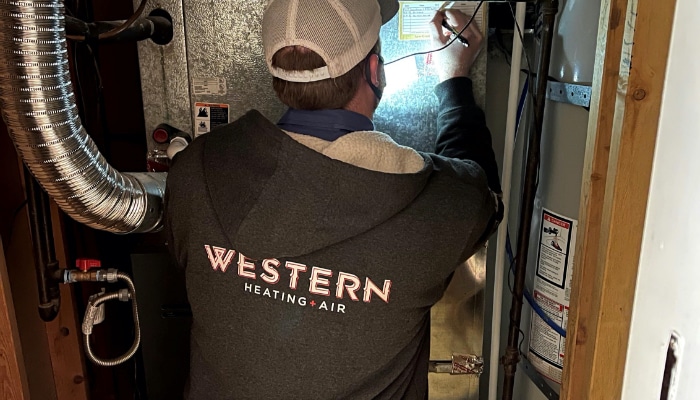
A true annual heating tune-up goes beyond a filter swap. Western’s NATE-certified technicians complete a 30-point safety inspection on every visit. They test for carbon monoxide at the register. They scan the heat exchanger for cracks. They verify burner assembly alignment and clean the flame sensor to stabilize the flame signal. They inspect the igniter for resistance within spec and confirm the draft inducer starts, runs, and shuts down cleanly. They test the limit switch and confirm the gas valve opens within the manufacturer’s time frame.
For variable-speed blower motors, the tech confirms programmed profiles and checks amperage draw under load. For high-efficiency modulating furnaces, they clean the condensate trap, check pressure switches, and confirm the flue slope. For standard gas furnaces, they confirm steady operation at the thermostat, verify the thermocouple or hot surface igniter, and clean the burner area to prevent soot. For electric furnaces, they test sequencers and inspect heat strips. For hybrid heat pumps, they verify defrost logic and confirm auxiliary heat staging.
Western documents readings and explains what they mean in plain language. If the pilot light shows discoloration or if ignition delays suggest weak flame carryover, the technician discusses cause and fix. If short cycling shows up under load, the tech looks at static pressure, filter type, and blower settings. The focus is cause and effect, not guesswork.
Local insight: neighborhoods, elevations, and service coverage
Sandy’s microclimates shape service timing and methods. Historic Sandy and Crescent sit lower and often trap more inversion particulates, which fill filters faster. Pepperwood, Willow Creek, and Alta Canyon sit higher and see lower overnight lows plus stronger canyon gusts that affect vent pressure. White City and Silver Sage tend to experience steady demand cycles that stress blower motors during long heating calls. Western schedules tune-ups with these conditions in mind and brings parts kits for common failures seen on the Wasatch Bench.
Homes around Alta View Hospital and near the Mountain America Expo Center rely on predictable heating during events and busy weeks. Western’s crews are frequently near America First Field and the Shops at South Town, which helps with rapid dispatch on peak days. Service spans the 84070, 84090, 84091, 84092, 84093, and 84094 zip codes, as well as Draper, Midvale, Cottonwood Heights, South Jordan, and Riverton. If a homeowner calls from 84092 or 84070 early in a storm, Western often has a technician nearby to secure the system before the next temperature drop.
The quiet early warning signs that timing can solve
Short cycling is common in January. The cause is often a clogged air filter or burner misalignment that overheats the heat exchanger. The limit switch then trips and the furnace shuts down. A fall tune-up cleans the burner assembly, confirms airflow, and prevents this cascade. Unusual rattling noises may point to a draft inducer bearing or set screw issue. Addressing it in October usually avoids a holiday breakdown. Pilot light discoloration can indicate contamination, wrong air mix, or a weak thermocouple on older systems. In Sandy, altitude often plays a role. Correcting gas valve calibration and documenting combustion readings keeps the flame stable.
Consider a recent service call in Willow Creek. A high-efficiency modulating furnace ran at low stage most of the fall. Once the first major snow hit, it could not hold the setpoint and started short cycling. The filter was overloaded by inversion dust, and the flame sensor showed residue buildup. A quick cleaning, a media filter change, and a thermostat calibration restored normal operation. That same scenario tends to appear in Pepperwood and Alta Canyon when weather flips fast from mild to frigid.
Brand-authorized care that protects warranties
Western Heating, Air & Plumbing services Trane, Carrier, Lennox, Rheem, Goodman, York, and more. For high-end systems like Trane TruComfort, Carrier Infinity, and the Lennox Signature Collection, factory-authorized methods matter. The technician references the correct temperature rise range, confirms staging logic, and logs pressure and combustion numbers for the specific model. This level of documentation protects warranties and validates performance.
Many Sandy homes feature high-efficiency modulating furnaces matched with variable-speed blower motors and smart thermostats. Annual documentation for these systems is not red tape. It is the record that proves the system has been cleaned, calibrated, and tested for safety. That is important for claims and resale conversations alike.
Furnace types covered in Sandy homes
Gas furnaces dominate in Salt Lake County, but electric furnaces and hybrid heat pumps appear in remodels and additions. Propane furnaces show up in edge cases and on lots near the foothills. Western services all these types. The process adjusts to the appliance. A gas furnace needs burner inspection, flame sensor cleaning, and gas valve verification. An electric furnace needs sequencer and heat strip checks. A hybrid heat pump needs a defrost cycle test and auxiliary heat staging confirmation. High-efficiency modulating furnaces require extra attention to condensate and pressure switch logic.
Across all types, Western confirms thermostat operation, verifies blower motor health, checks limit switch behavior, and inspects the heat exchanger. If there is any hint of a carbon monoxide leak, the tech isolates the system and shares options on the spot. Safety first, then performance.
Seasonal fuel use and utility savings
Clean burners and correct combustion air support complete fuel burn. Dirty burners and clogged air filters waste money. Sandy homeowners often see a 5 to 15 percent swing in gas consumption after a proper precision tune-up and heating system calibration. The exact number varies by insulation, window quality, and thermostat habits. What does not change is the physics. Airflow plus clean flame equals efficient heat transfer at the heat exchanger. That means quicker warm-up, fewer long run cycles, and lower monthly bills.
A tuned draft inducer and a verified limit switch also protect the heat exchanger from thermal stress. That extends system life. Replacing a heat exchanger is rarely worth it on older units. Preventing cracks is the better path. Proper timing helps here because early fall service stabilizes combustion before the hardest run hours begin.
Safety checks that should not wait
Carbon monoxide safety can never be a back-burner item. Western measures CO levels at the supply, checks the flue for blockage, confirms the inducer wheel is clean, and inspects for cracked heat exchangers. Technicians use calibrated instruments and match the readings to the manufacturer’s acceptable ranges. If something flags, the conversation is direct and clear. Some fixes are simple, like clearing a partially blocked intake that a snow drift covered. Others demand immediate repair, such as a compromised heat exchanger or a failing gas valve.
The inspection includes the thermocouple where present, ignition timing for hot surface igniters, and voltage checks at the control board. These details stop nuisance lockouts that strand a family on a single-digit night. It is the difference between a furnace that runs fine on Tuesday and one that runs fine all season.
Homeowner tasks between professional tune-ups
Homeowners can support reliability with simple monthly checks, especially during inversion season. None of these replace a professional safety inspection, but they keep the system freer of stress.
<!-- Five quick monthly checks for Sandy homeowners --> <ol> <li>Check and replace the air filter if it looks gray or clogged, especially during inversions.</li> <li>Keep the intake and exhaust clear of snow and leaves after storms.</li> <li>Listen for new rattles or grinding sounds from the draft inducer or blower area.</li> <li>Confirm steady, blue flames on older pilot systems and report discoloration.</li> <li>Vacuum return grilles to reduce dust load on the blower motor.</li> </ol>If a homeowner notices frequent on and off cycling, rising gas bills without a temperature change, or lukewarm air at the registers, it is time to schedule service. Fast action reduces risk to the heat exchanger and helps catch small issues before they grow.
Why Western Heating, Air & Plumbing for furnace maintenance in Sandy, UT
The company is family-owned and operated since 1995, licensed and insured as a Utah contractor, and BBB A+ rated. Every maintenance visit includes a NATE-certified technician, a rigorous 30-point safety inspection, and altitude-specific adjustments. The Western Savings Club automates annual maintenance, adds repair discounts, and includes priority scheduling during peak cold snaps. For busy households in 84092 and 84070, that priority access is the difference between a comfortable night and a scramble for space heaters.
Western supports major brands such as Carrier, Trane, Lennox, Rheem, Goodman, and York. The team is experienced with Trane TruComfort, Carrier Infinity, and the Lennox Signature Collection control logic. That expertise matters during sub-zero nights when staging and modulation must be right the first time.
Calls often come from Willow Creek and Pepperwood after the first serious freeze. The pattern is familiar. Dirty flame sensors, igniters outside spec, and uneven thermostat calibration. Western’s trucks carry common parts and diagnostic tools for same-visit fixes whenever possible. If a system needs a larger repair, the technician lays out clear options and puts safety first.
Service area details and rapid dispatch
Western serves Sandy zip codes 84070, 84090, 84091, 84092, 84093, and 84094, with frequent calls near America First Field, the Shops at South Town, Dimple Dell Regional Park, Alta View Hospital, and the Mountain America Expo Center. Nearby cities such as Draper, Midvale, Cottonwood Heights, South Jordan, and Riverton also fall within regular routes. During storms, dispatchers position crews to cut travel time and protect more homes before dusk.
That local presence pairs with consistent process. A technician arrives, reviews concerns, inspects the furnace, cleans the burner assembly and flame sensor, checks the igniter and draft inducer, verifies thermostat operation, confirms limit switch safety, and calibrates the gas valve when applicable. The visit ends with clear documentation and practical tips matched to the home’s location and usage.
Pricing signals and lifetime value
Annual maintenance costs less than a single no-heat emergency in most cases. The bigger return comes from fewer breakdowns and lower fuel spend. A well-tuned high-efficiency gas furnace, for example, keeps the heat exchanger in its proper temperature rise range. That protects a part that often determines the system’s lifespan. Add steady airflow from a clean filter and a verified blower motor, and the home sees even heat across rooms in Pepperwood, Crescent, and Silver Sage.
Homeowners who plan to sell in the next few years also gain. A record of annual maintenance from a NATE-certified, BBB A+ company signals responsible care. It helps during buyer inspections and keeps appraisal conversations calmer.
Answers to common Sandy furnace questions
How early should the tune-up be scheduled? In Sandy, aim for September. October still works, but slots fill fast once the first cold morning hits. What if the furnace is new? New systems still need a baseline check to protect warranties and catch early issues. Does filter type matter? Yes. An overly restrictive filter can starve airflow and cause short cycling. Western can measure static pressure and match the filter to the system. What about smart thermostats? They help, but they must be configured to the furnace type, especially with variable-speed blowers and high-efficiency modulating furnaces.
What if carbon monoxide is detected? The technician follows safety protocols, informs the homeowner, and isolates the issue. The next steps depend on the cause, from a blocked flue to a damaged heat exchanger. Repairs proceed only after a clear safety plan is in place.
Ready to schedule furnace maintenance in Sandy, UT
If the home sits near the Wasatch bench or in a valley zone with frequent inversions, timing now sets the tone for the entire winter. Western Heating, Air & Plumbing offers professional furnace cleaning, precision tune-ups, and complete HVAC inspections for gas furnaces, electric furnaces, hybrid heat pumps, high-efficiency modulating furnaces, and propane furnaces. The team cleans the flame sensor and inspects the igniter to prevent winter ignition failures. They address short cycling and soot buildup caused by neglected burner assemblies. They calibrate thermostats and gas valves so the system runs smoothly on storm nights.
Schedule service today. Ask about the Western Savings Club for annual maintenance and repair discounts. If the address is in 84092, 84093, or 84094 near Dimple Dell, or in 84070 around America First Field, expect rapid dispatch during business hours. A NATE-certified technician will perform a 30-point safety inspection and give clear, local advice that keeps the home warm through every inversion and every storm.
For homeowners who want steady comfort, lower bills, and safe operation, furnace maintenance in Sandy, UT is the most direct path. Set the appointment before the next system run stretches into the night. The Wasatch weather will do what it does. A tuned furnace will do what it should.
Western Heating, Air & Plumbing provides HVAC and plumbing services for homeowners and businesses across Sandy and the surrounding Utah communities. Since 1995, our team has handled heating and cooling installation, repair, and upkeep, along with ductwork, water heaters, drains, and general plumbing needs. We offer dependable service, honest guidance, and emergency support when problems can’t wait. As a family-operated company, we work to keep your space comfortable, safe, and running smoothly—backed by thousands of positive reviews from satisfied customers.
Western Heating, Air & Plumbing
9192 S 300 W
Sandy,
UT
84070,
USA
231 E 400 S Unit 104C
Salt Lake City,
UT
84111,
USA
Phone: (385) 233-9556
Website: https://westernheatingair.com/, Furnace Services
Social Media:
Instagram |
Facebook |
BBB
Map: View on Google Maps